A few days ago I wrote about the anti-SLAPP motion filed by “Reckless” Ben Schneider against Bricks & Minifigs (BAM Franchising) over the ridiculous RICO suit they filed against him for his efforts to get BAM to pay back the money owed to Bryan Mansell. The original suit was based on the laughable claim that Ben and Mansell were involved in a conspiracy to extort money from BAM — a claim that is undermined by the fact that BAM then turned around and settled with Mansell, returning some of his Lego sets and cutting him a check (while still insisting it did nothing wrong, of course. For what it’s worth, even after the settlement, Mansell says BAM returned only about 35 of the 387 sets its own records showed as unsold, and seven of those weren’t even his, which makes me wonder what exactly the settlement said and how that didn’t get worked out ahead of time).
In researching that previous article, I came across the site used for that last link, The BAM Map, which is an invaluable journalistic goldmine, in that whoever is behind it is cataloging in great detail basically every sketchy or nefarious thing that BAM is doing.
But digging through that site, I discovered that BAM (and the McNeff family behind it) appear to have launched a new censorial bit of SLAPP litigation and general lawfare against The BAM Map as well.
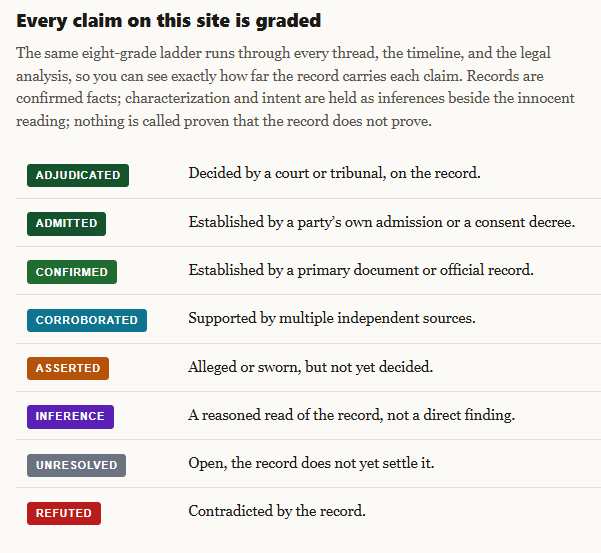
Sites that catalog corporate shenanigans aren’t always the most trustworthy, but The BAM Map goes out of its way to detail and post their evidence, and flag whether particular claims are merely asserted as opposed to proven as fact. It’s actually quite impressive.

Anyway, it appears that the lawfare against the BAM Map started with some highly questionable DMCA takedown claims, aka the coward’s censorship tool. BAM first issued a DMCA notice to The BAM Map’s host because the site had posted an internal BAM document that analyzed the impact on their stores from Reckless Ben’s reporting on how BAM refused to abide by the consignment agreement they had taken over. While it is an internal document, so long as The BAM Map itself broke no laws in obtaining the document, they had every legal right as journalists to publish it. The idea that it’s copyright infringement is laughable on its face. That’s not what copyright is for, and also there’s no indication that BAM ever even registered the copyright, which it would need to do before it could even sue for copyright infringement. Indeed, since any registration would then come after the alleged infringement, statutory damages are also completely off the table, leaving only “actual damages” from… being unable to license their internal documents?
In other words, the DMCA takedown is bullshit.
And then they did it again. Just last week they filed a second DMCA notice, once again demanding that BAM’s internal documents that The BAM Map published be removed (even though, as far as I can tell, the first notice had already gotten them taken down).
Let’s be clear: this is abuse of copyright law by BAM. DMCA notices are supposed to be for stopping actual infringement: someone distributing your work in a way the law doesn’t allow. But publishing documents as part of news reporting is a strong fair use case (especially for factual material like sales data and PR talking points). Not to mention, if you could just DMCA any internal corporate files that journalists received from whistleblowers, you would basically end whistleblowing completely. Using copyright this way isn’t just abuse of the DMCA, it’s an attack on First Amendment-protected reporting.
But BAM didn’t stop there. It then filed a John Doe suit against the site’s anonymous operators, once again using Dentons, the massive global law firm that it used to file the SLAPP suit against Schneider and Mansell. Notably, while the lawsuit mentions the DMCA notice and the existence of “copyrighted materials,” it does not include any copyright claims. Instead, it claims that Google Drive audit logs show someone with “franchise-level access” downloaded the files. So, according to the lawsuit, whoever runs The BAM Map is likely a current or former franchisee (or some other insider) who is breaching their contract with BAM and misappropriating trade secrets under both Utah’s trade secrets law and the federal Defend Trade Secrets Act. For what it’s worth, the operators of the site claim that the knowledge base that is central to the claims was not only accessible to those who had specific permissions but rather “was open to anyone on September 26th” and that it was only earlier this week that BAM locked it down.
This case is marginally stronger than the lawsuit against Reckless Ben, but only barely. Even if the documents are coming from an insider, it’s hard to see how BAM can credibly claim that its crisis PR talking points about Reckless Ben qualify as “trade secrets” that “derive economic value” from being kept secret. The entire point of this lawsuit just seems focused on creating massive chilling effects for whoever is operating the site to silence them. To me, that makes it a pretty clear SLAPP suit.
The key point of the lawsuit is BAM trying to unmask who is behind The BAM Map, and to that end, after filing the lawsuit, BAM got a magistrate judge to approve expedited discovery, authorizing subpoenas to Vercel and GoDaddy for subscriber records and IP logs to identify who is behind the BAM Map, in order to properly serve them and include them in the lawsuits. While magistrates granting subpoenas like this isn’t uncommon, it’s a bit worrisome that it was done with no supporting declaration, and the order has no notice provision or period to object.
Under the First Amendment, you have a right to speak anonymously, but it’s not absolute. The way this generally works is that a court will allow the subpoena to issue, and then (one hopes) the companies on the receiving end (GoDaddy and Vercel) alert the site’s operators so they can move to quash. There are a couple of different standards that courts use to determine when it’s okay to unmask an anonymous speaker, with Dendrite and Cahill being the most common. In the past, the federal courts in Utah have recognized the Dendrite test in quashing a subpoena when Koch Industries tried to unmask an anonymous critic.
Hopefully the anonymous operators of The BAM Map have access to lawyers who understand this, and can step up in response to the subpoenas, in order to protect their anonymity. At the very least, they’ve started a GoFundMe for legal support.
Bricks & Minifigs’ continued efforts to abuse the legal system to suppress reporting by critics says an awful lot about the McNeff family, both in how they run their business and in how they treat the people who call out their practices. It’s an attack on First Amendment protected speech and an attempt to create a chilling effect to scare off future reports or whistleblowers.
And, finally, shame on Dentons. A giant global law firm putting its name on this is just embarrassing.